
7 Common Mistakes to Avoid When Buying Your First Mini Excavator
A mini excavator is not a small purchase. It is a major investment. If you choose the wrong one, you could face slow work, high repair costs, and daily frustration for years. That is why smart planning is just as important as the excitement of getting a new machine.
3/4/20265 min read
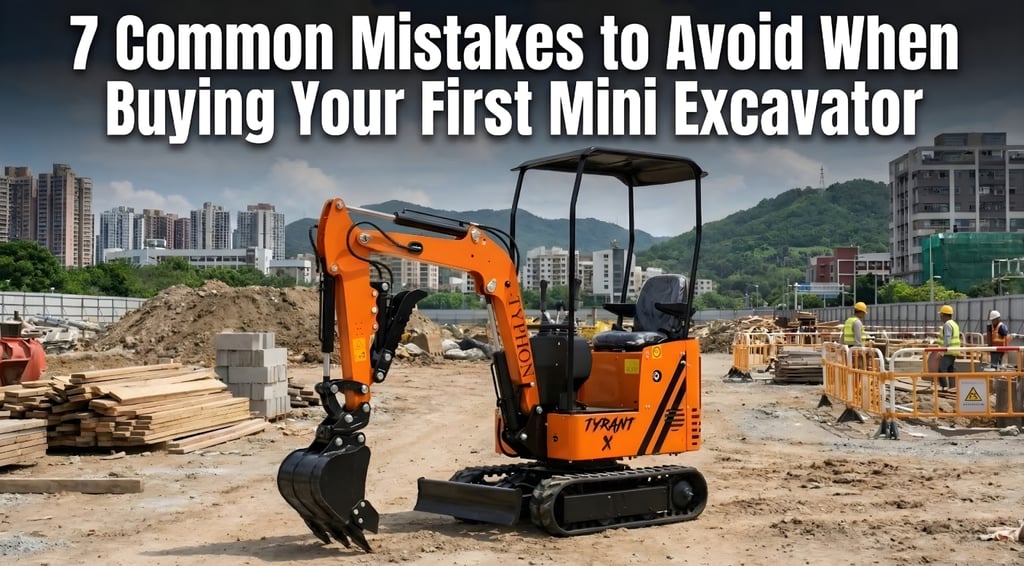
Buying your first mini excavator is a big step. It means your business is growing and you are ready to take on bigger jobs. Whether you are a contractor, landscaper, or property owner, adding a compact machine to your equipment list feels exciting. But before you rush to buy, it is important to slow down and think carefully.
A mini excavator is not a small purchase. It is a major investment. If you choose the wrong one, you could face slow work, high repair costs, and daily frustration for years. That is why smart planning is just as important as the excitement of getting a new machine.
Many first-time buyers focus only on the price or engine power. They believe all compact excavators can do the same type of work. This is not true. Small details make a big difference. Things like hydraulic power, machine weight, digging depth, and arm design can change how well the excavator performs on real job sites.
If you are searching for the best mini excavator for sale, it is important to avoid common beginner mistakes. In this guide, we will share seven common mistakes first-time buyers often make. By understanding these problems early, you can choose the right mini excavator, improve job efficiency, and protect your investment for the long term.
1. Underestimating Dig Depth and Reach Requirements
One of the most frequent regrets we hear from first-time owners is that they bought a machine that was just slightly too small for their needs. It is tempting to choose a smaller model to save money or to ensure it fits easily into a backyard. While compact dimensions are a major selling point of mini excavators, prioritizing size over capability can backfire.
If you purchase a machine with a maximum dig depth of six feet, but your standard sewer line jobs require digging seven feet down, you will find yourself in a difficult position. You will be forced to dig benching steps or ramps to get the machine lower, which wastes time and destroys more of the job site than necessary. Always calculate the maximum depth you anticipate needing and add a buffer. Buying a machine that can reach just a bit further than your average job requires ensures you aren't pushing the equipment to its absolute limit every single day.
2. Overlooking Hydraulic Flow and Attachment Compatibility
A mini excavator is more than just a digging machine. It works like a mobile hydraulic power unit. The real value comes from the attachments you connect to the arm. Many new buyers only think about the bucket. But later, you may want to use a hydraulic breaker, auger, or brush cutter. This is where hydraulic flow becomes very important.
Not all compact excavators have the same auxiliary hydraulic power. Some models have standard flow, which works fine for a thumb or tilting bucket. But that may not be enough for tools like a flail mower or brush cutter that need high flow and steady pressure.
If your machine does not have enough hydraulic capacity, you limit your future work options. That can mean missing out on profitable jobs.
Before buying a mini excavator for sale, think about the attachments you may use in the next few years. Check the hydraulic flow rate (GPM) and pressure (PSI). Make sure the machine can handle those tools efficiently. This simple step can protect your investment and help your business grow.
3. Ignoring Transport Weight and Logistics
It is easy to get caught up in the specs of the machine itself and forget about how you are going to get it to the job site. A common scenario involves a buyer purchasing a 10,000-pound excavator only to realize their current truck and trailer setup is legally rated for only 7,000 pounds.
This mistake triggers a domino effect of expenses. Suddenly, you aren't just buying an excavator; you are upgrading your trailer, potentially upgrading your truck, or even dealing with commercial driver’s license (CDL) requirements you hadn't anticipated. Always check the "operating weight" of the machine, but do not stop there. You must also account for the weight of the trailer, the buckets, the fuel, and any extra attachments. Ensure your entire transport ecosystem is legal and safe before you settle on a machine size.
4. Prioritizing Upfront Price Over Total Cost of Ownership
We understand that budget is often the primary driver for a first purchase. However, the cheapest machine on the lot is rarely the cheapest machine to own over five years. The "Total Cost of Ownership" (TCO) includes fuel consumption, maintenance availability, resale value, and durability.
A bargain-bin excavator might save you money on day one, but if it consumes 20% more fuel per hour than a premium model, those costs add up rapidly over a busy season. Furthermore, cheaper machines often lack the robust build quality of established brands, leading to more frequent downtime. If your machine is in the shop waiting for parts while you have a deadline to meet, the money you saved on the purchase price evaporates instantly. Look for value, reliability, and fuel efficiency rather than just the lowest sticker price.
5. Neglecting Operator Comfort and Control Patterns
If you are an owner-operator, you are going to be spending eight to ten hours a day sitting in the cab. First-time buyers often dismiss comfort features as luxuries, but in the excavation business, comfort equals productivity. A cramped cab, a stiff seat, or poor visibility leads to operator fatigue. When an operator is tired, they work more slowly and are more likely to make dangerous mistakes.
Additionally, pay close attention to the control patterns. Most modern machines use ISO controls (joysticks), but some older or specific market machines might use SAE (backhoe) controls. While many machines have a pattern changer valve, not all do. Ensuring the machine is intuitive for you or your crew to operate is essential. Pilot controls, which use hydraulic pressure rather than mechanical linkages, offer smoother operation and less physical strain, making a significant difference during long shifts.
6. Disregarding the Undercarriage and Track Type
The undercarriage is the most expensive part of the excavator to repair, yet it often gets the least amount of attention during the buying process. First, consider the track material. Rubber tracks are standard for mini excavators because they allow you to work on driveways and established turf without causing damage. Steel tracks offer better durability in jagged rock but will destroy pavement.
Beyond material, consider the width. Some compact excavators feature retractable tracks. This feature allows the undercarriage to retract to pass through a narrow gate and then expand for stability while digging. If you plan on doing residential backyard work, failing to prioritize a machine with retractable tracks could mean losing out on jobs simply because you cannot fit through the entrance.
7. Failing to Investigate Service and Parts Support
This is perhaps the most critical mistake of all. You can buy the best-engineered machine in the world, but if the nearest dealer is three hours away, or if parts have to be shipped from overseas with a six-week lead time, that machine is a liability.
Before you commit to a brand, research the local support network. Call the parts department and ask about the availability of common wear items like filters, hydraulic hoses, and track tensioners. A reliable dealer partner is just as important as the machine itself. When a hydraulic line bursts at 2:00 PM on a Friday, you need a local partner who can get you back up and running, not a helpline in a different time zone.
Conclusion
Buying your first mini excavator is an exciting step toward independence and business expansion. It transforms the way you work, turning days of manual labor into hours of precision machine work. However, the market is filled with options that look similar on paper but perform very differently in the field.
By taking the time to honestly assess your job requirements, understanding the importance of hydraulic versatility, and looking beyond the initial price tag to the long-term support and reliability, you can make a choice that powers your business for years to come. Do your homework, ask the tough questions, and choose a machine that is ready to work as hard as you do.
NewExcavatorsfor Sale
High-quality, compact construction equipment and attachments, including mini
Support
TYPHON Machinery Offices
2522 S Malt Ave. Commerce, CA 90040 United States
Phone Support
Sales : +1 213-214-2203
Logistic : +1 626-389-2472
Sales : Sales@typhonmachinery.com
Logistic : Logistics@typhonmachinery.com
Tech Support : Support@typhonmachinery.com
newexcavatorsforsale © 2025. All rights reserved.