
Chinese Mini Excavator: What Buyers Should Know Before Choosing One
Learn what to check before buying a Chinese mini excavator, including size, engine, hydraulics, attachments, parts, warranty, and real jobsite use.
4/24/20265 min read
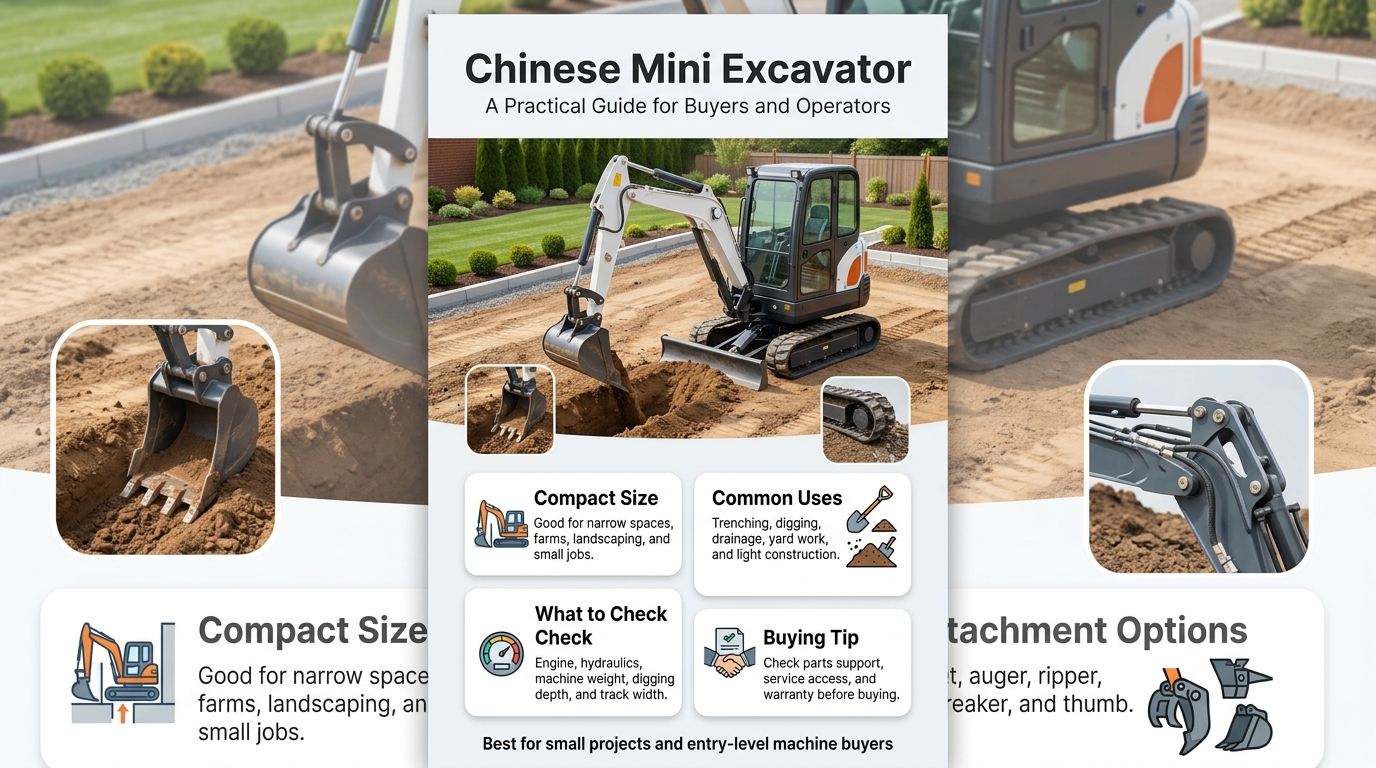
A Chinese mini excavator can be a practical choice for small contractors, landowners, farms, rental businesses, and buyers who need a compact digging machine without paying for a larger excavator. These machines are often used for trenching, landscaping, drainage work, light demolition, small foundation jobs, and general property maintenance.
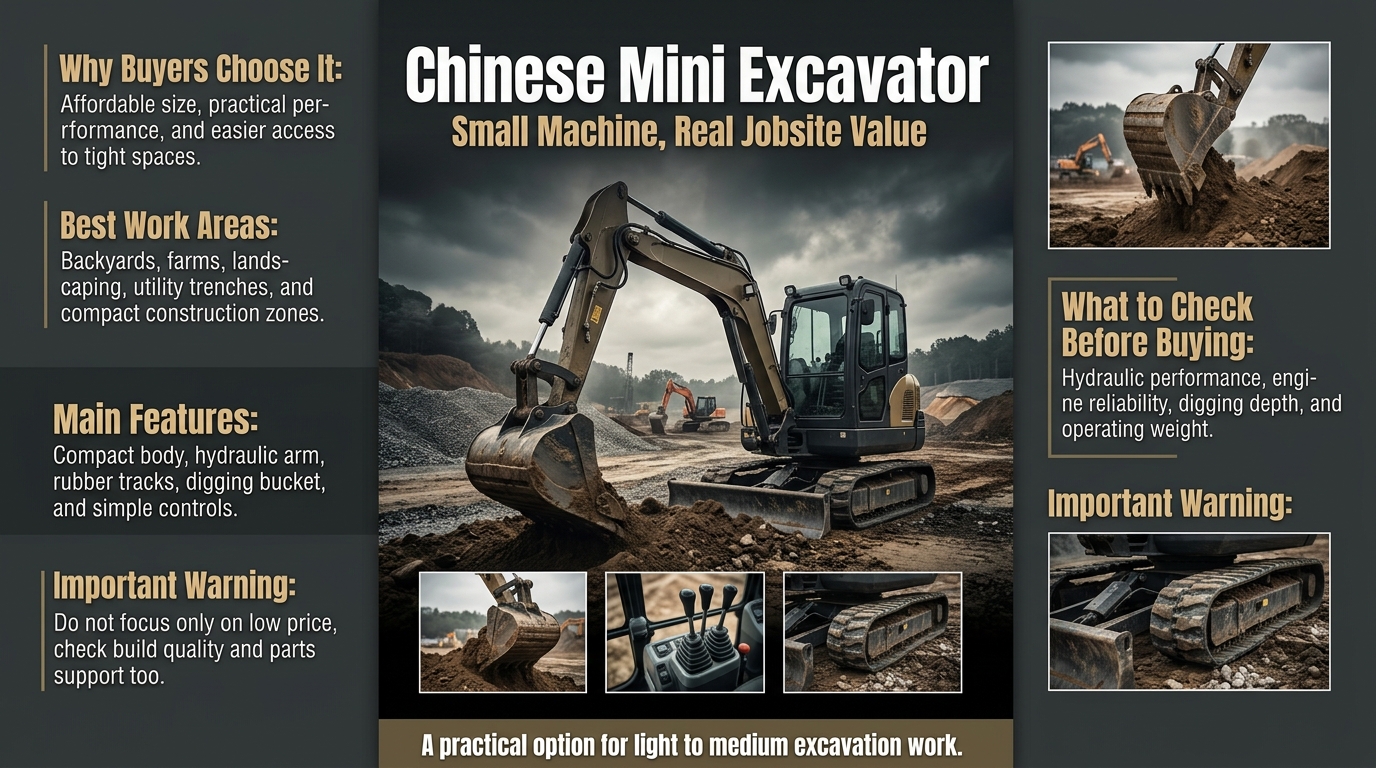
But not every machine is the same. Some Chinese mini excavators are simple and affordable, while others come with better engines, stronger hydraulics, enclosed cabins, pilot controls, and more attachment options. The key is knowing what to check before buying, so the machine fits your work instead of becoming a problem later.
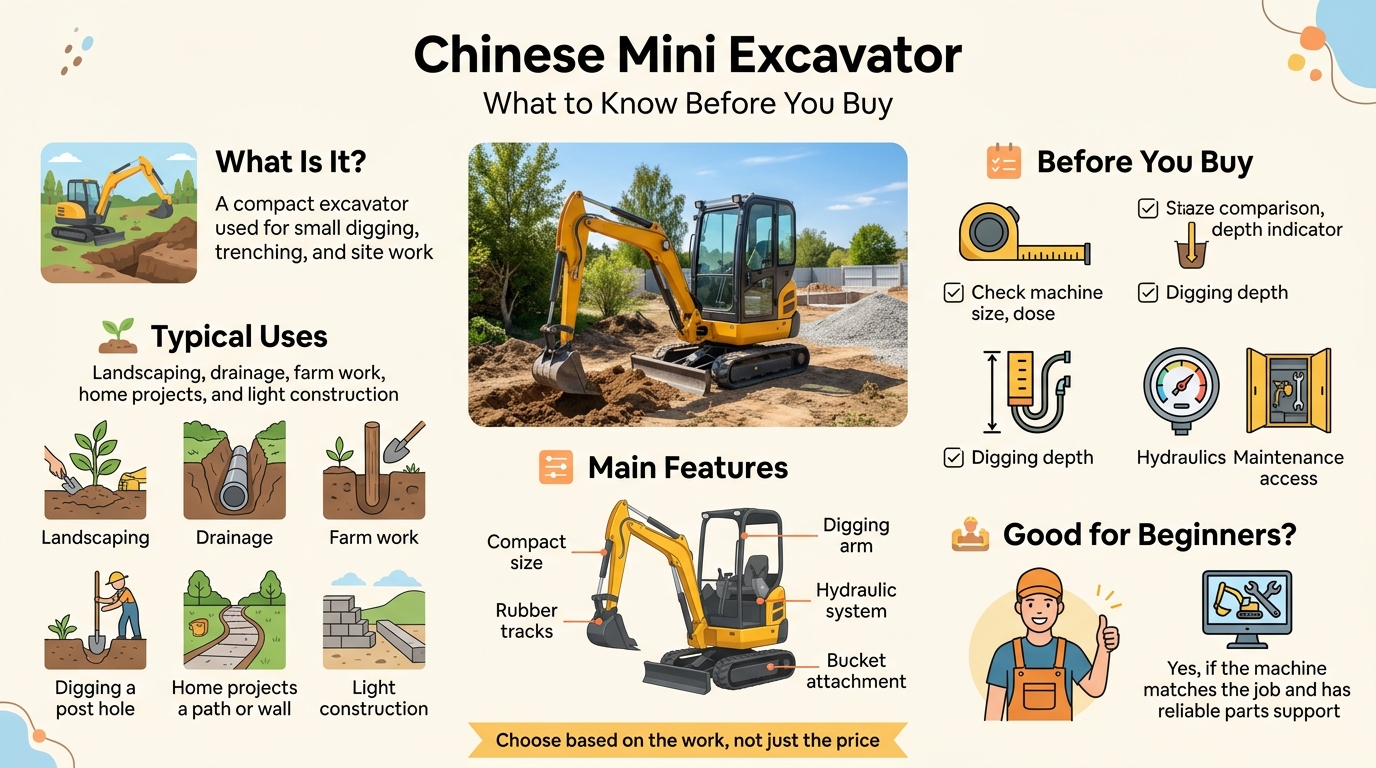
What Is a Chinese Mini Excavator?
A Chinese mini excavator is a compact excavator made by manufacturers in China. Most models are built for small to medium jobs where a full-size excavator would be too large, too expensive, or hard to move around.
These machines are usually available in smaller weight classes, often from around 1 ton to 3.5 tons. Smaller models are common for home projects, gardens, farms, and narrow work areas. Larger compact models can handle deeper digging, heavier attachments, and longer working hours.
A basic model may include a canopy, rubber tracks, a small diesel engine, joystick controls, and a standard digging bucket. Higher-spec models may include auxiliary hydraulics, swing boom, hydraulic thumb, enclosed cabin, heating, adjustable tracks, or quick coupler options.
The main benefit is simple: a compact machine can dig, lift, grade, and trench in places where bigger machines cannot easily work.
Why Buyers Consider Chinese Mini Excavators
Many buyers look at Chinese mini excavators because they are often more affordable than many well-known global brands. For a small business or first-time buyer, price matters. A lower purchase cost can make it easier to own a machine instead of renting one again and again.
Another reason is availability. Many Chinese-built machines are sold through dealers, importers, online marketplaces, and equipment suppliers. This gives buyers more options in size, features, and price range.
They can also be useful for businesses that need a machine for light-duty or occasional work. For example, a landscaping company may not need a large excavator every day, but a compact unit can help with planting, trenching, grading, and small clearing jobs.
That said, price should not be the only reason to buy. A cheap machine is not always a good deal if parts are hard to find, the engine is weak, or the hydraulics cannot handle the work you need.
Main Features to Check Before Buying
Before choosing a Chinese mini excavator, start with the basics. The machine should match the type of work you plan to do.
First, check the operating weight. A 1-ton mini excavator is easy to move and good for tight spaces, but it will not dig or lift like a 2-ton or 3-ton machine. If you need deeper trenches, better stability, and stronger digging force, a larger model may be better.
Next, look at the engine. A reliable engine is important because it affects power, fuel use, noise, and long-term maintenance. Some buyers prefer machines with engines that are easier to service and have better parts availability.
Hydraulic performance is also important. The hydraulic system controls digging strength, boom movement, attachment use, and machine smoothness. If you plan to use attachments such as an auger, breaker, flail mower, or hydraulic thumb, make sure the machine has the right auxiliary hydraulic flow and pressure.
Also check track width, boom swing, digging depth, bucket size, and whether the machine has a canopy or enclosed cabin. These small details can make a big difference on real jobs.
Common Uses for Small Job Sites
A Chinese mini excavator is often used on jobs where space is limited and the digging work is not too heavy. These machines are common for residential work, small construction sites, farms, orchards, landscaping projects, and utility repairs.
For trenching, a compact excavator can dig narrow lines for water pipes, drainage, electrical conduit, and irrigation systems. For landscaping, it can remove soil, shape small areas, dig planting holes, and move material around the site.
On farms, small excavators can help with ditch cleaning, fence post work, small pond maintenance, and drainage channels. For property owners, they can handle jobs that would take too long by hand, such as removing stumps, digging footings, or clearing small areas.
The machine is most useful when the job needs digging power but does not require a large excavator. It is not meant to replace a full-size machine for heavy construction, deep excavation, or large-scale earthmoving.
What to Watch Out for Before Purchase
The biggest mistake buyers make is looking only at the price. A low price can be attractive, but you need to check what is included and what may cost more later.
Look at the build quality closely. Check welds, hoses, pins, bushings, track frame, paint finish, control layout, and service access. A machine that looks fine in photos may feel very different in person.
Ask about warranty, service support, and spare parts. If a hose, filter, pump, joystick, track motor, or electrical part fails, you need a clear way to replace it. Waiting weeks for a simple part can stop your work and cost money.
You should also check the machine’s real specifications, not just sales claims. Digging depth, engine power, hydraulic flow, lifting capacity, and operating weight should be clear. If the seller cannot explain these details, that is a warning sign.
For imported machines, buyers should also understand shipping, taxes, local compliance, and after-sales support. A machine may look cheap at first, but the final cost can change once delivery and setup are included.
Attachments and Parts Support Matter
Attachments can make a mini excavator much more useful, but only if the machine is built to handle them. Common attachments include digging buckets, grading buckets, augers, rippers, hydraulic thumbs, trenching buckets, and small breakers.
Before buying, check the attachment connection size, pin diameter, hydraulic lines, quick coupler options, and auxiliary hydraulic setup. Not all compact excavators support every attachment. A small machine may run a basic auger well, but it may struggle with a hydraulic breaker if the flow is too low.
Parts support is just as important as attachments. Filters, rubber tracks, hoses, teeth, pins, bushings, and hydraulic fittings are normal wear items. A good supplier should be able to help you find replacement parts without making the process confusing.
For business use, this matters even more. Downtime can hurt your schedule. A machine with better parts support is often worth more than a cheaper unit with no clear support system.
Is a Chinese Mini Excavator Right for You?
A Chinese mini excavator can be a good choice if you need a compact machine for light to medium work, want a lower entry cost, and understand what to check before buying. It can be useful for landscaping, small construction, farming, trenching, property maintenance, and rental use.
It may not be the best choice if you need heavy-duty performance every day, advanced dealer support, or a machine for large commercial excavation. In that case, you may need to compare different brands, sizes, and support options more carefully.
The best approach is simple: choose the machine based on the job, not just the price. Check the weight class, engine, hydraulics, digging depth, attachment support, warranty, and parts availability. A well-matched machine can save labor, speed up small jobs, and give better value over time.
Conclusion
A Chinese mini excavator can be a smart option for buyers who need a compact digging machine at a practical cost. The right model can handle trenching, landscaping, farm work, small construction, and general site maintenance.
Before buying, look beyond the price. Check the machine size, hydraulic power, parts support, attachments, warranty, and seller reliability. A careful choice will give you a machine that works better, lasts longer, and fits your real job needs.
NewExcavatorsfor Sale
High-quality, compact construction equipment and attachments, including mini
Support
TYPHON Machinery Offices
2522 S Malt Ave. Commerce, CA 90040 United States
Phone Support
Sales : +1 213-214-2203
Logistic : +1 626-389-2472
Sales : Sales@typhonmachinery.com
Logistic : Logistics@typhonmachinery.com
Tech Support : Support@typhonmachinery.com
newexcavatorsforsale © 2025. All rights reserved.