Understanding Gradeability in Construction Equipment
Learn how construction equipment gradeability impacts your projects. Discover how engine power and equipment traction ensure safety when working on slopes.
3/28/20266 min read
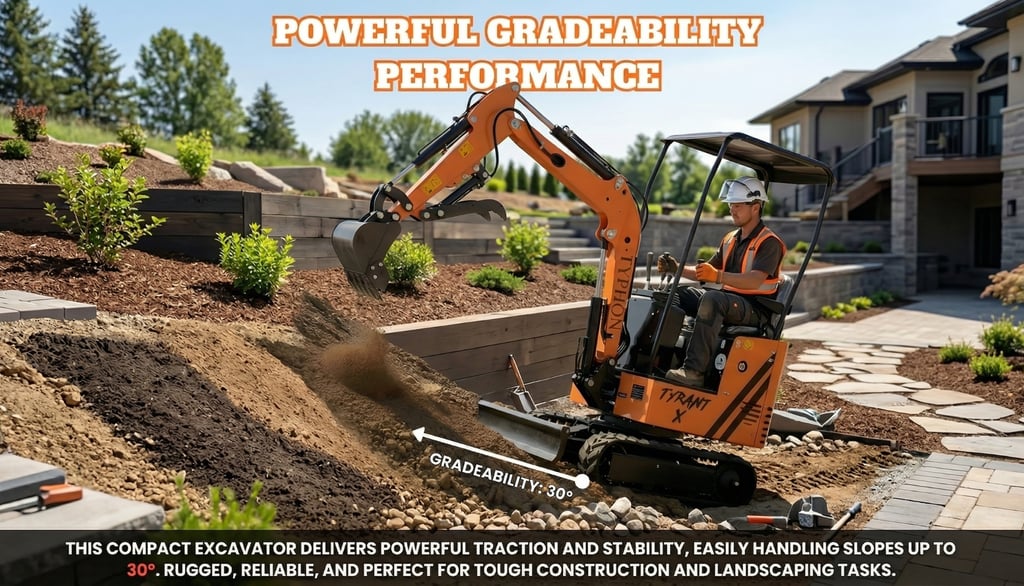
Construction sites rarely offer perfectly flat terrain. Most projects require heavy machinery to navigate steep hills, deep trenches, and highly uneven ground. If your machines cannot handle the physical incline, your project timeline stalls, and your crew faces severe safety risks. Securing reliable, uninterrupted progress requires a firm understanding of exactly what your machinery can handle before you unload it from the trailer.
This brings us to a critical, often misunderstood specification: construction equipment gradeability. Knowing how to read and apply this metric ensures you deploy the right machine for the exact demands of your job site. It protects your capital investment from premature mechanical wear and keeps your operators secure.
This guide explains the fundamental concept of gradeability. We will explore how it directly impacts the performance of your heavy machinery when working on slopes. You will learn how core factors like engine power, weight distribution, and equipment traction dictate a machine's climbing capability. Finally, we will provide authoritative tips for selecting the perfect equipment to conquer uneven terrain effectively.
What Is Construction Equipment Gradeability?
Gradeability represents the maximum incline a machine can climb continuously while maintaining a steady forward speed, without stalling or losing traction. Manufacturers determine this specification through rigorous physical testing and complex engineering calculations.
Engineers typically express this measurement as a percentage, though you may sometimes see it written in degrees. A percentage grade calculates the ratio of vertical rise to horizontal run. For example, if a hill rises 10 feet vertically over a 100-foot horizontal distance, it has a 10 percent grade. A 100 percent grade equals a 45-degree angle, which is exceptionally steep for any piece of heavy machinery.
It is vital to understand that a manufacturer's published gradeability rating assumes ideal conditions. It assumes the machine travels on firm, dry ground with a highly experienced operator at the controls. Real-world job sites rarely offer these perfect conditions. Therefore, professionals use the published gradeability as a baseline capability, not an absolute guarantee for every terrain type.
Key Factors Influencing Climbing Performance
A machine does not climb a hill simply because it has a powerful engine. Gradeability relies on a complex harmony between several mechanical systems. If any one of these systems fails or underperforms, the machine will stop moving forward.
The Role of Raw Engine Power and Torque
Gravity constantly pulls the machine downward. To overcome this force, the diesel engine must generate massive amounts of power. However, high horsepower alone does not guarantee a successful climb. The engine must deliver substantial low-end torque.
Torque is the actual twisting force that turns the axles or track sprockets. When a machine begins climbing a steep hill, the physical resistance multiplies instantly. High torque allows the engine to muscle through this resistance without stalling. If the engine lacks sufficient torque, the hydraulic pumps cannot generate the pressure needed to drive the travel motors, and the machine will stop dead on the incline.
Maximizing Equipment Traction
You can have the most powerful engine on the market, but if the machine cannot grip the soil, it will not climb. Equipment traction is the physical friction between the machine's undercarriage and the ground. When working on slopes, maintaining strong traction is your primary defense against uncontrolled sliding.
Tracked machines generally offer superior traction compared to wheeled machines. A track undercarriage distributes the machine's massive weight across a wide surface area. The steel grousers or heavy rubber treads bite deeply into the soil, locking the machine in place. Wheeled machines rely on pneumatic tires, which have a much smaller contact patch. If the ground becomes wet or muddy, tires quickly lose their grip, spin freely, and compromise the machine's gradeability entirely.
Managing Weight Distribution and Center of Gravity
Every piece of equipment has a specific center of gravity. This is the exact point where the machine's weight is perfectly balanced. When a machine sits on flat ground, the center of gravity sits low and safely between the tracks or wheels.
When you drive that machine onto a slope, the center of gravity shifts dramatically. If the slope is too steep, the center of gravity moves outside the physical footprint of the undercarriage. When this happens, the machine loses its stability and tips over. Furthermore, poor weight distribution causes the uphill tracks or tires to lose contact with the ground, instantly destroying your equipment traction and halting your forward progress.
The Mechanics of Working on Slopes Safely
Navigating steep terrain requires strict adherence to safety protocols. A machine operating at the absolute limit of its gradeability leaves no room for operator error. Implementing standard operating procedures ensures your crew remains productive and safe.
Approaching Hills Correctly
Operators must always drive straight up or straight down a steep slope. You should never drive a piece of heavy machinery horizontally across the face of a hill. Driving across a slope drastically increases the risk of a lateral rollover. The downhill side of the machine bears almost all the weight, causing the uphill side to lift off the ground.
If an operator must change directions, they should do so on flat ground. They should drive to the top of the hill, turn the machine safely, and then proceed straight back down. This disciplined approach to maneuvering prevents catastrophic accidents and protects your valuable equipment.
Managing Dynamic Loads on Inclines
A machine's gradeability rating applies to the base machine itself. It does not account for a fully loaded bucket or a heavy attachment suspended in the air. Carrying a heavy load fundamentally alters the machine's center of gravity and reduces its safe climbing angle.
When traveling up a hill, the operator must keep the heavy load positioned uphill and as close to the ground as possible. If the operator raises a loaded bucket high into the air while climbing, the machine becomes top-heavy and incredibly unstable. Lowering the load lowers the center of gravity, anchoring the machine to the earth and maximizing its natural traction.
How to Select the Right Equipment for Uneven Terrain
Choosing the right machinery dictates the success of your project. If you deploy a fleet incapable of handling your job site's topography, you will suffer constant delays and mechanical breakdowns. Use these professional strategies to match the right machine to the right environment.
Conduct a Thorough Site Assessment
Never assume the topography of a new job site. Before mobilizing any equipment, you must conduct a comprehensive physical site assessment. Walk the property and measure the steepest grades your machines will need to navigate. Pay close attention to the soil conditions.
Are you working on hard-packed clay, loose sand, or slick, wet mud? A 20 percent grade on solid rock requires completely different equipment than a 20 percent grade on loose gravel. By mapping out the terrain and soil composition accurately, you eliminate the guesswork from your equipment selection process.
Review Manufacturer Specifications Carefully
Once you know the exact demands of the site, review the technical specifications for your available fleet. Look for the maximum gradeability percentage listed in the operator's manual. Compare this number directly against the measurements you took during your site assessment.
Always build a safety buffer into your calculations. If your job site features a 25 percent grade, do not select a machine with a maximum gradeability of exactly 25 percent. Operating a machine at its absolute maximum capacity all day places immense strain on the hydraulic travel motors and diesel engine. Instead, select a machine rated for a 35 or 40 percent grade. This ensures the equipment operates comfortably within its limits, reducing fuel consumption and preventing premature component failure.
Prioritize Tracked Undercarriages for Severe Slopes
If your primary objective involves working on slopes heavily, you should prioritize tracked machinery over wheeled alternatives. Compact track loaders, dozers, and tracked excavators offer unmatched stability and traction on severe inclines.
The long, wide footprint of a tracked undercarriage grips uneven terrain aggressively. It prevents the machine from sliding backward during heavy pushes and provides a stable platform for heavy lifting. While tracked machines cost slightly more to maintain than wheeled loaders, their ability to conquer difficult terrain ensures your project remains profitable and on schedule regardless of the landscape.
Conclusion
Understanding construction equipment gradeability is a fundamental requirement for professional site management. It is not just a highly technical engineering term; it is a practical metric that dictates your daily operational capabilities. By respecting the complex relationship between engine torque, weight distribution, and equipment traction, you ensure your machinery performs flawlessly.
Working on slopes safely requires discipline, rigorous operator training, and the right iron for the job. Never push a machine beyond its stated climbing capacity, and always maintain a low center of gravity when transporting heavy materials. These professional practices protect your crew and extend the operational lifespan of your expensive fleet.
Take the time to review the technical manuals for your current heavy equipment. Document the maximum gradeability for each machine and ensure your project managers understand these limits. By making informed, strategic equipment choices, you guarantee your company can conquer the toughest terrains and consistently deliver exceptional results for your clients.
NewExcavatorsfor Sale
High-quality, compact construction equipment and attachments, including mini
Support
TYPHON Machinery Offices
2522 S Malt Ave. Commerce, CA 90040 United States
Phone Support
Sales : +1 213-214-2203
Logistic : +1 626-389-2472
Sales : Sales@typhonmachinery.com
Logistic : Logistics@typhonmachinery.com
Tech Support : Support@typhonmachinery.com
newexcavatorsforsale © 2025. All rights reserved.