
Wheel Loader Breakout Force Explained: Why It Matters for Jobsite Productivity
Blog post description.
Discover what wheel loader breakout force is and why it matters. Learn how choosing the right wheel loader boosts your jobsite productivity and efficiency.
3/18/20265 min read
Earthmoving projects demand equipment that delivers uncompromising power and unwavering reliability. When your crew faces a massive pile of compacted gravel or heavy, wet soil, raw engine horsepower alone will not guarantee success. The true measure of a machine's ability to dig, pry, and load dense materials lies in a highly specific engineering metric. That critical metric is wheel loader breakout force.
Understanding this essential specification completely transforms how you approach heavy material handling and equipment procurement. Many operators mistakenly focus solely on bucket capacity or total operating weight when evaluating new machinery. While those numbers matter, they do not tell the whole story of how a machine performs under immense physical stress.
This comprehensive guide explains exactly what wheel loader breakout force is and how it directly dictates your daily operations. You will learn the mechanical principles behind this lifting power and how it heavily influences your overall job site productivity. By mastering these concepts, you will gain the confidence needed when choosing the right wheel loader for your business.
Understanding Wheel Loader Breakout Force
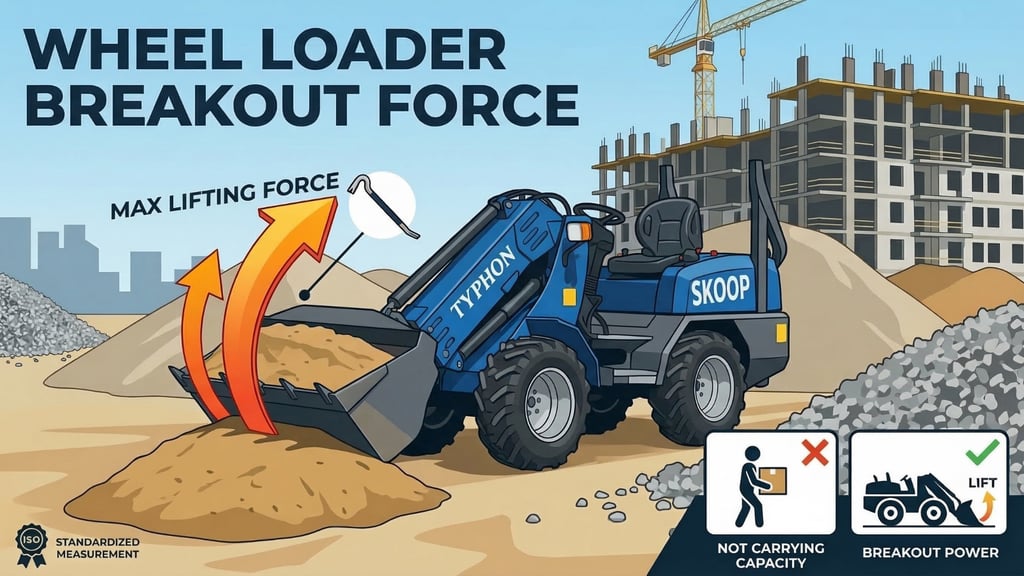
The wheel loader breakout force represents the absolute maximum upward force a machine can exert at the cutting edge of its bucket. Engineers measure this force while the machine is completely stationary, with the loader arms resting on the ground. The measurement specifically captures the mechanical prying power generated when the bucket cylinders roll the bucket backward.
This metric tells you exactly how much resistance the machine can overcome when pushing into a stubborn pile of material. It is not a measurement of how much weight the machine can carry across a site. Instead, it measures the sheer violence the hydraulic system can deliver to rip materials apart.
Industry standards, such as those established by the International Organization for Standardization (ISO), govern exactly how manufacturers calculate and report this number. This rigorous standardization ensures that you can accurately compare the capabilities of different machines across various brands. A high breakout force indicates a machine built to handle severe digging and loading applications without stalling.
The Mechanics Behind the Muscle
The incredible prying power of a wheel loader originates deep within its internal fluid power network. The machine relies on a sophisticated hydraulic system to translate engine rotation into massive physical force. High-pressure hydraulic fluid rushes into heavy-duty cylinders, pushing heavy steel rods outward with immense pressure.
The tilt cylinders, which control the curling motion of the bucket, generate the primary force measured during a breakout test. However, the hydraulic pressure is only one-half of the mechanical equation. The physical design of the loader arms, known as the linkage, plays an equally critical role in multiplying that hydraulic power.
Most heavy-duty wheel loaders utilize a Z-bar linkage design to maximize their digging capabilities. This specific geometric arrangement acts as a massive lever, magnifying the force generated by the hydraulic tilt cylinder. By optimizing both the hydraulic pressure and the mechanical linkage, manufacturers deliver the extreme force required for demanding earthmoving tasks.
Why Breakout Force Drives Jobsite Productivity
Jobsite productivity relies entirely on moving the maximum amount of material in the shortest possible time. When a wheel loader lacks the necessary force to penetrate a pile, the operator must back up and ram the pile repeatedly. This frustrating process wastes valuable time, drastically slowing down your overall cycle times and delaying dependent tasks.
A machine with adequate wheel loader breakout force slices into compacted materials effortlessly on the very first attempt. The bucket fills completely and rapidly, allowing the operator to reverse, turn, and dump the load in one fluid, continuous motion. Slashing seconds off every single cycle adds up to hours of saved labor and significantly more tons of material moved by the end of the shift.
Furthermore, efficient digging directly improves your daily fuel economy. Ramming into a stubborn pile forces the engine to run at maximum RPM while the torque converter slips, burning massive amounts of diesel fuel. By slicing through the material efficiently, a powerful loader completes the work using significantly less energy, protecting your operational budget.
Tackling Tough Materials with Confidence
Different materials present unique physical challenges that test the limits of your heavy equipment. Loose, dry topsoil requires very little effort to scoop and transport. However, materials like compacted clay, frozen earth, and blasted rock firmly resist the cutting edge of a loader bucket.
When you operate a loader with insufficient prying power in these harsh conditions, the machine will literally push itself backward instead of penetrating the pile. The tires will lose traction and spin violently against the abrasive ground. This wheel spins instantly destroys expensive heavy equipment tires, leading to massive, unexpected replacement costs.
A loader engineered with high breakout force anchors itself and pries the stubborn material loose before the tires ever break traction. The hydraulic cylinders overpower the resistance of the earth, protecting your drivetrain and your expensive rubber tires. This capability allows your crew to take on challenging, high-margin projects in difficult soil conditions with absolute confidence.
Operator Comfort and Machine Longevity
The benefits of optimal digging power extend far beyond the speed of material transfer. A loader that struggles to fill its bucket creates a violent, uncomfortable experience for the operator inside the cab. The constant bucking, shaking, and hydraulic stalling cause severe operator fatigue, which leads to slower reaction times and potential safety hazards.
When the machine has the strength to dig smoothly, the operator remains comfortable, focused, and productive throughout a long twelve-hour shift. This smooth operation also drastically reduces the physical shock and vibration transferred into the machine's structural chassis. Less vibration means fewer stress fractures in the metal and a longer lifespan for the loader arms and pivot pins.
Protecting the structural integrity of your equipment is a fundamental aspect of professional fleet management. By matching the machine's prying capabilities to the density of the material, you eliminate unnecessary mechanical abuse. This proactive approach reduces your long-term maintenance costs and ensures your loader maintains a high resale value.
Choosing the Right Wheel Loader for Your Operation
Selecting the perfect machine requires a careful analysis of your primary daily applications. Choosing the right wheel loader means striking the perfect balance between breakout force, operating weight, and tipping load. You must evaluate the heaviest, most compacted materials your crew handles on a regular basis.
If your operations primarily involve light, loose materials like mulch or wood chips, prioritizing maximum prying force is unnecessary. An oversized machine will consume more fuel and cost more to purchase without providing a tangible return on investment. In these specific scenarios, a larger bucket capacity and a higher tipping load offer far more value.
Conversely, if you work in environments involving rock quarries or heavy demolition debris, high breakout force becomes a critical specification. You need equipment specifically engineered to pry heavy, locked materials apart without stalling. Carefully matching machine specifications to your unique operational demands will help ensure optimal productivity and performance.
Conclusion
Wheel loader breakout force is a vital engineering metric that dictates the true capability of your heavy equipment fleet. It determines whether your machine will conquer a stubborn pile of material or struggle helplessly against the resistance. By understanding how this mechanical prying power impacts cycle times, fuel efficiency, and tire wear, you can make highly informed purchasing decisions.
Prioritizing this specific capability ensures that your crew is equipped with the tools needed to perform their jobs safely and efficiently. Evaluate your current operational bottlenecks and assess the density of the materials you move most frequently. If your loaders are constantly spinning their tires or stalling in the pile, it may be time to upgrade to a more capable machine that aligns with your project requirements.
Careful selection and understanding of your equipment's breakout force can elevate your jobsite productivity and help achieve the long-term success of your business.
NewExcavatorsfor Sale
High-quality, compact construction equipment and attachments, including mini
Support
TYPHON Machinery Offices
2522 S Malt Ave. Commerce, CA 90040 United States
Phone Support
Sales : +1 213-214-2203
Logistic : +1 626-389-2472
Sales : Sales@typhonmachinery.com
Logistic : Logistics@typhonmachinery.com
Tech Support : Support@typhonmachinery.com
newexcavatorsforsale © 2025. All rights reserved.